A recent national survey investigated how many Americans used psychedelics in 2025, and the numbers are striking. Psilocybin alone was used by more than 11 million Americans. The rising popularity of these substances makes the need for effective education, preparation, and care increasingly urgent.
This is what we are working toward: a world where compassionate, skillful support is not rare, but a shared standard of care. This vision is rooted in harm reduction and peer support, two guiding lights for our work at Zendo Project.
Harm reduction begins with a simple truth: people take risks. Psychedelics can open profound experiences, and sometimes intense or destabilizing ones too.
Harm reduction does not shame that reality or pretend we can eliminate difficulty. Instead, it asks: How do we build safety nets so that when intensity arises, people are met with support rather than stigma?
Peer support is one of the most powerful ways those safety nets expand.
When care skills are held only by professionals or emergency responders, support is less accessible and often arrives too late. But when these same skills are shared among a community, care becomes available earlier, closer, and with less escalation.
Peer support is not about acting as a therapist. It is about presence—staying with another human being through intensity with calm compassion. This matters because many challenging psychedelic experiences are not emergencies, even if they look alarming. Without skill, even well-meaning helpers can unintentionally escalate distress. Peer support offers another option: trained steadiness, shared language, and the ability to let an experience unfold without force or panic.
And while this work is rooted in psychedelic harm reduction, these principles extend far beyond psychedelics.
People encounter non-ordinary states every day: grief, crisis, conflict, overwhelming emotion. We consistently hear from Zendo SIT participants that these skills show up most powerfully in everyday life: in difficult conversations, moments of rupture, or simply staying present when someone they love is overwhelmed.
The lessons psychedelics have revealed are not confined to psychedelic experiences. They point to a deeper way of meeting intensity with presence and care, no matter where it appears.
When these skills are practiced in our communities, care becomes more available, more humane, and more woven into the fabric of daily life.
In Psychedelic Service,
Jessa Hurst
Zendo Project
Director of Marketing
Zendo Project Board Update
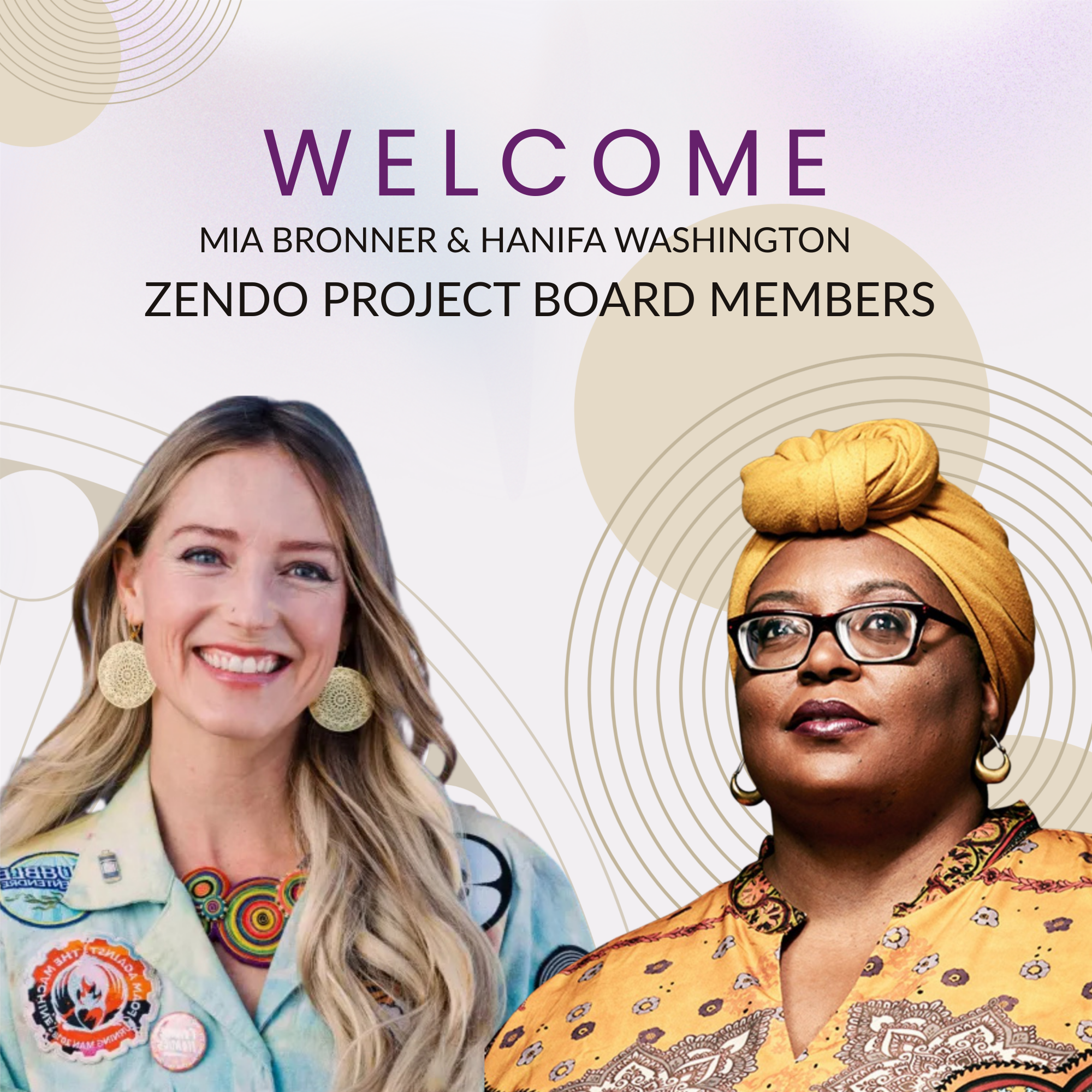
We are honored to welcome Mia Bronner and Hanifa Washington to Zendo Project’s Board of Directors!
Mia and Hanifa each bring unique experience and shared commitment to expanding harm reduction, peer support, and compassionate care for people navigating non-ordinary states of consciousness. Their leadership arrives at a pivotal moment for our organization and for the broader psychedelic ecosystem, as the need for ethical, community-based support continues to grow.
Mia Bronner
Joined January 2026
Mia Bronner is an artist, activist, and student of traditional medicines whose work centers on healing, ceremony, and collective liberation. A graduate of the AWE Psychedelic Therapist Training, Mia currently serves as Senior Manager of the Magic Foam Experience at Dr. Bronner’s, where she leads a team of artists, builders, and performers creating community events rooted in joy, embodiment, unity, and co-creation.
Mia studied set design at the Istituto Europeo di Design in Rome and worked across film, television, and theater before attending Burning Man for the first time in 2013. It was there, as a builder for the Zendo Project, that she discovered a deeper calling: creating spaces that support profound connection, ceremony, and care.
Her purpose is to support the healing of all beings by holding spaces that invite us into harmony with one another, Mother Earth, and Great Spirit. We are grateful to have Mia’s artistry, heart, and vision guiding Zendo’s future.
Hanifa Nayo Washington
Joined February 2026
Hanifa Nayo Washington (she/her) is a healing justice practitioner, award-winning artivist, communications strategist, and certified psychedelic facilitator. Her work lives at the intersection of mindfulness, collective care, and transformational systems change, grounded in the values of beloved community.
With more than 30 years of experience spanning nonprofit leadership, holistic wellness, and community-centered systems change, Hanifa currently serves as Co-Director of the Psychedelic Mental Health Access Alliance, where she is helping build the evidence base needed to support publicly fundable psychedelic-assisted therapy care models while cultivating a national alliance to advance equitable access.
Hanifa is also Co-Founding Team Emeritus of Fireside Project, where she helped launch the Psychedelic Peer Support Line in 2021. Since then, Fireside has supported over 35,000 calls from individuals navigating psychedelic experiences, offering an essential model of peer-based care.
A longtime Burning Man participant and former Zendo volunteer, Hanifa brings both lived experience and deep professional expertise to this work, along with a guiding inquiry that reflects the spirit of Zendo: How do we learn to speak truth to ourselves first, so we can speak truth to one another?
Looking Ahead
We are thrilled to welcome Mia and Hanifa into leadership at Zendo Project. Their combined wisdom in art, activism, healing justice, peer support, and psychedelic care will strengthen our ability to meet this moment with integrity, depth, and vision.
Please join us in celebrating Mia Bronner and Hanifa Washington as they step into this role with us.
Zendo SIT Highlight
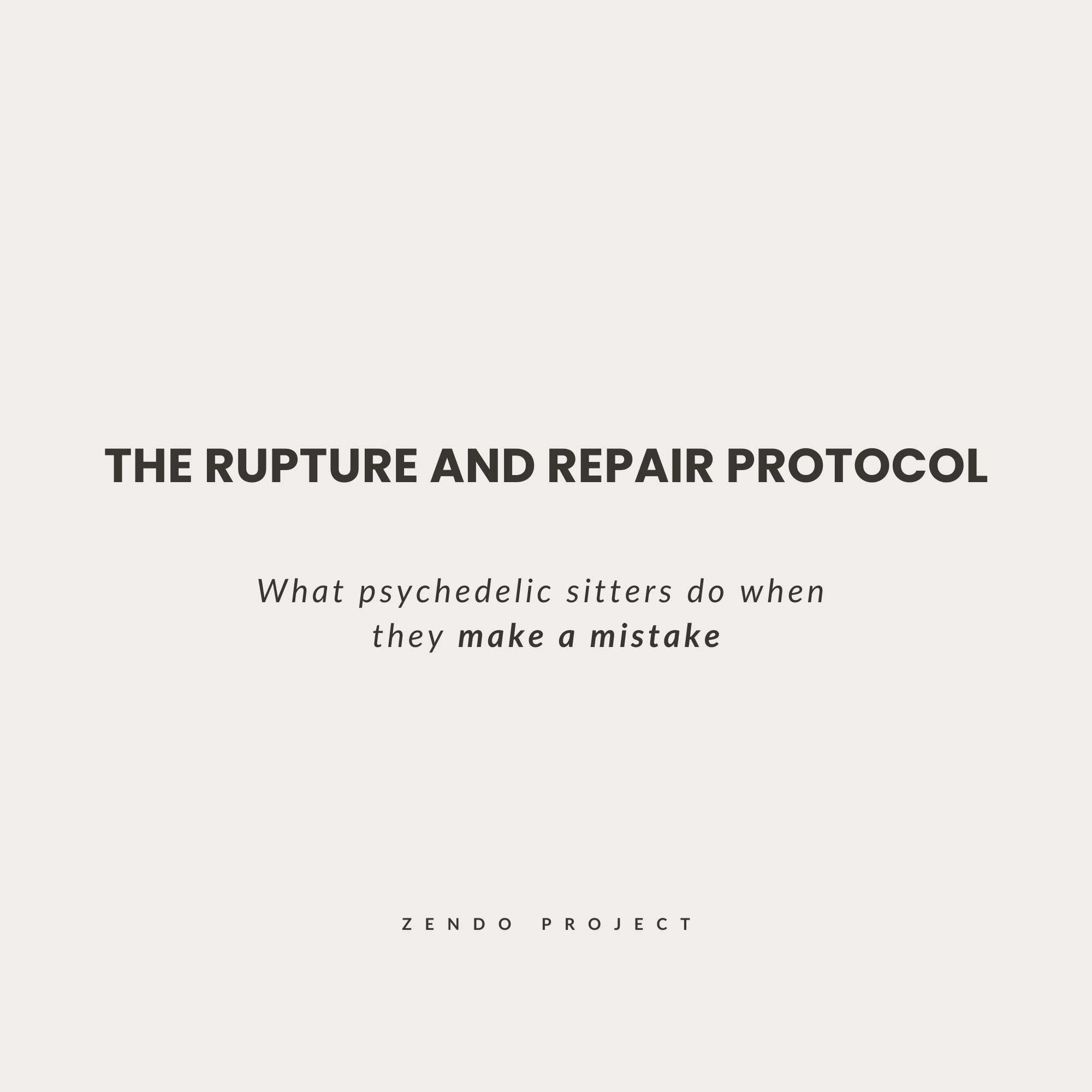
We recently shared a new Instagram carousel highlighting one of the core protocols we teach inside Zendo Sitting & Integration Training (SIT): The Rupture and Repair Protocol.
In psychedelic care, mistakes happen. Even the most well-intentioned sitter may miss a cue, move too quickly, say the wrong thing, or try to fix instead of simply being present. In non-ordinary states, even small moments of disconnection can feel enormous.
It’s important to remember that psychedelic sitting is not about perfection. What matters is having the skills to recognize rupture when it happens and to return to repair with care, humility, and presence.
Repair can look like:
- slowing down and regulating yourself first
- acknowledging impact over intent
- offering a simple apology
- returning to consent and choice
- listening without interruption
- coming back later if the moment is too intense to process
If you’d like to explore this protocol more deeply, we invite you to join our next cohort of Zendo Sitting & Integration Training.
March Zendo SIT starts soon.
GPS Workshop Recap
Thank you to the Global Psychedelic Society for hosting Zendo Project for a recent workshop on psychedelic harm reduction and compassionate care. We’re grateful for GPS’s commitment to building thoughtful, community-based education and connection across the psychedelic field.
GPS is helping grow a network of local psychedelic societies around the world. If you’re looking for community, you can explore their site to find a society near you, and if there isn’t one yet, you can even learn how to start one. It’s a powerful way to get involved and help strengthen safe, informed psychedelic culture.
Thank you, GPS, for doing this work.
If your organization, podcast, school, or community group is interested in hosting a Zendo Project workshop, we’d love to connect. Please fill out our contact request form for more information.
Free Mini Course
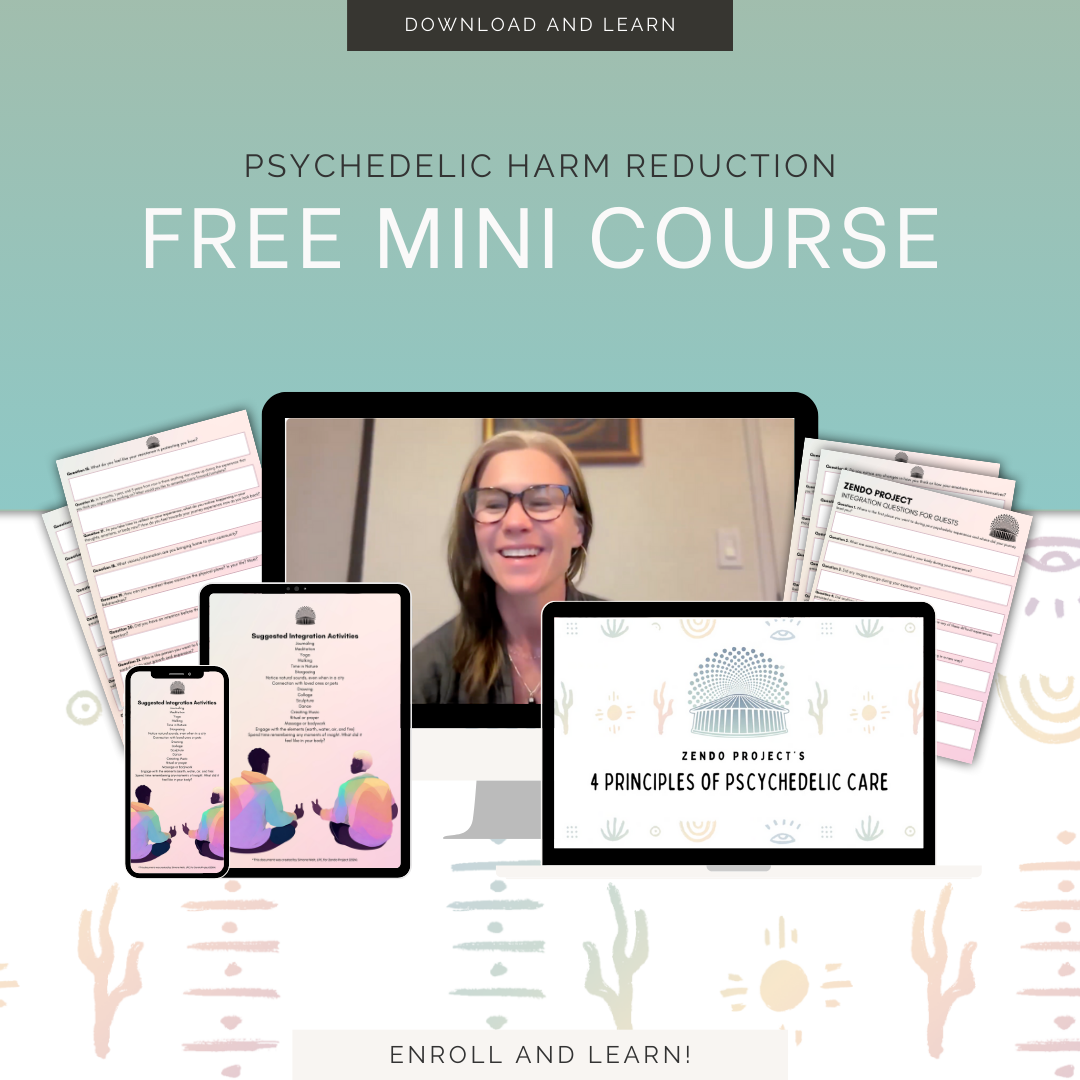
If you haven’t already, make sure to check out our new free resource: the Psychedelic Harm Reduction Mini Course. This short course introduces Zendo Project’s Four Principles of Psychedelic Care, grounded in over a decade of real-world peer support experience.
Psychedelic Culture 2026

Psychedelic Culture, Chacruna’s annual spring conference on plant medicines, returns to San Francisco on April 17–19, 2026!
Psychedelic Culture is unlike any other gathering in the field. It centers urgent conversations around reciprocity, global healing systems, extractive capitalism, and cultural integrity, while amplifying underrepresented voices and community-based approaches to healing. Together, we’re imagining a path forward that considers all peoples and traditions.
Check out our shop!
Support our mission with Zendo Project gear. Every purchase helps expand our programs — and every time your wear it, you help spread the word about psychedelic harm reduction and peer-based care.