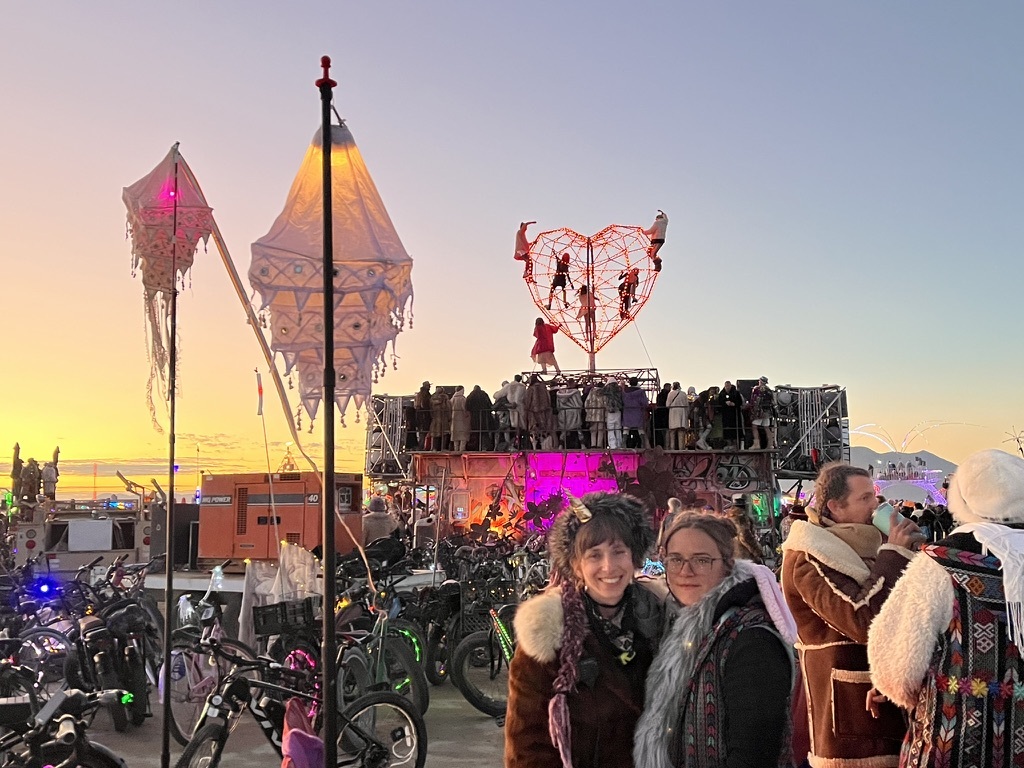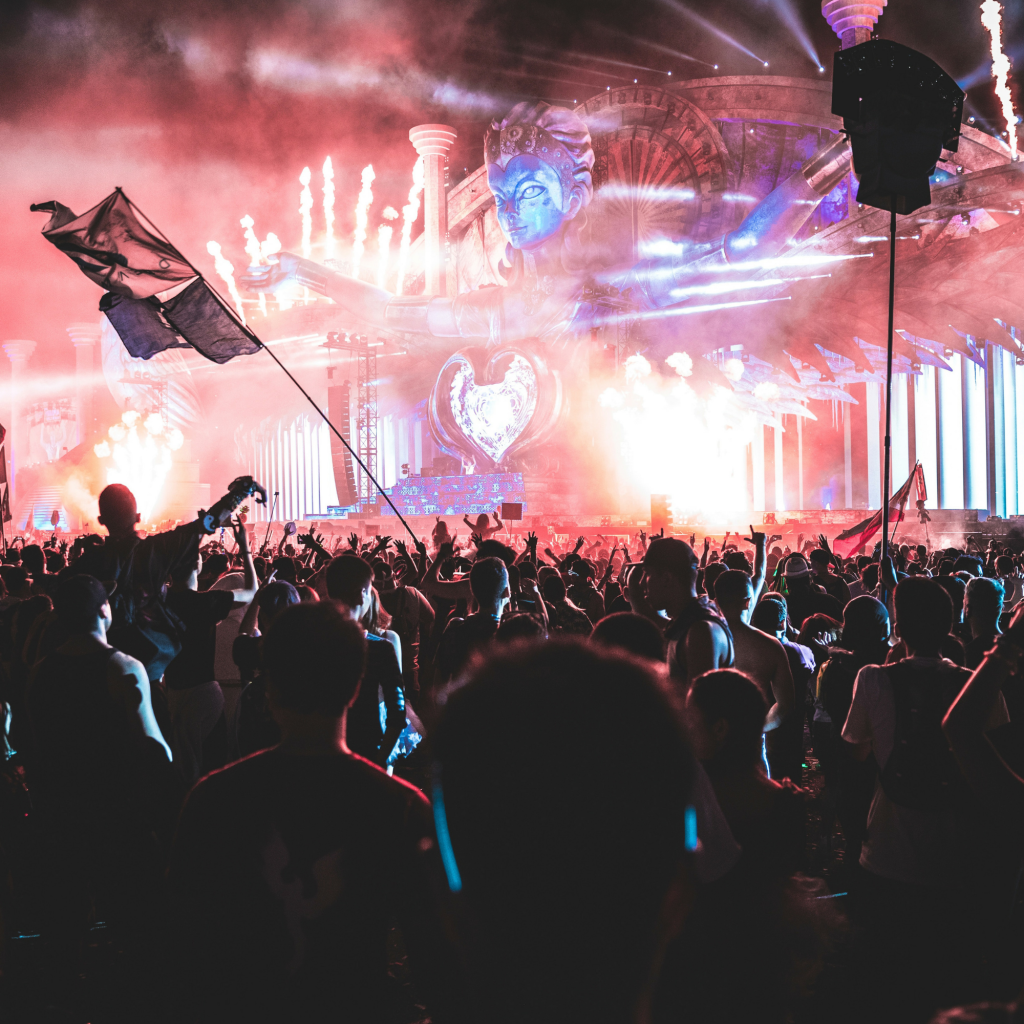
Dance, music, and community gatherings have been part of human culture for thousands of years. Long before there were stages, sound systems, or wristbands, our ancestors gathered around fires, ate sacred plants and fungi, and danced to drums late into the night. Today, many of us find ourselves doing something remarkably similar on weekends and all summer long, though these days we’ve added heavy bass music and, let’s be honest, a somewhat larger variety of substances.
Since raves and music festivals took shape in the late 20th century, they’ve become places where people gather, take psychedelics, and dance the night away. And many attendees have long reported something that goes beyond a good time: these events can feel healing. Perhaps that’s part of what keeps drawing us back.
What we’ve learned over 14 years at Zendo Project, is that regardless of people’s intentions, something powerful happens in these settings:. Whether they take psychedelics, or simply choose to dance for hours on end, a lighthearted act of recreation can transform into deep re-creation: transformation, meaning, and lasting positive change.
Now, science is catching up.
The Study: Healing Childhood Trauma at Raves and Ceremonies
A study published in Progress in Neuro-Psychopharmacology and Biological Psychiatry followed 85 adults with histories of childhood maltreatment, physical, emotional, or sexual abuse, or neglect, who planned to take psychedelics with therapeutic intent in one of two group settings: an organized ceremony (36%) or a rave or electronic dance music festival (64%).
The researchers, led by clinical psychologist C.J. Healy, surveyed participants before their experience, within two days after, and again two months later. The most common substances were psilocybin mushrooms, ayahuasca, MDMA, and LSD.
The results were striking. Two months after their experience, participants reported:
- Significantly lower PTSD and complex PTSD symptoms
- Major reductions in internalized shame
- Significantly higher connectedness to themselves, to others, and to the world
The effect sizes were large across the board (d = 0.73–1.12), meaning these weren’t subtle shifts, people experienced meaningful improvements in their lives.
The Dance Floor and the Ceremony Circle Aren’t So Different
Here’s one of the study’s most fascinating findings: it didn’t matter whether participants attended a ceremony or a rave. The improvements were equivalent in both settings.
That may sound surprising, but the researchers point out that raves and traditional psychedelic ceremonies share more than we might think. The paper says:
“[R]aves or other electronic dance music events … share a number of social, cultural, environmental, structural, formal, ethical, and phenomenological features with traditional psychedelic group ceremonies, such as taking place at night, the use of music designed to occasion altered states of consciousness, the presence of a musical ‘guide’ or ‘facilitator’ of the group experience (such as an ayahuasquero/curandero or a DJ), a communal ethos that intentionally promotes bonding and connectedness, and elements of ritual.”
As Healy put it, these settings may serve as “semi-structured, naturalistic containers for socially mediated therapeutic experiences with psychedelics.” In other words: the modern dance floor has ancient roots.
It’s Not Just the Psychedelic – It’s the Experience
The study also sheds light on how healing happens. Long-term improvements weren’t predicted by the dose alone. Instead, they were predicted by the quality of the acute experience: emotional breakthrough, psychological insight, ego dissolution, oceanic boundlessness, interpersonal closeness, and communitas, that sense of belonging that arises when a room full of strangers feel connected.
You might have expected some of these findings from psychedelic exploration alone. But it was what happened inside the experience, especially the social and emotional dimensions, that predicted lasting change.
This matters deeply for people healing from childhood maltreatment, which is an inherently relational trauma. It makes sense that relational settings, rooms and dance floors full of openness, acceptance, and belonging, could be uniquely suited to help repair it.
Why This Matters to Us at Zendo Project
This is exactly the corner of the psychedelic ecosystem where Zendo Project emerged. Most psychedelic research happens in tightly controlled clinical settings, yet the vast majority of psychedelic experiences happen everywhere else: at festivals, retreats, gatherings, and homes. These remain among the least studied, and least supported, parts of the ecosystem.
This study had no control group and relied on self-report, so it can’t prove the psychedelics themselves caused the healing. And not every experience at a festival is blissful. Some of the most transformative experiences begin as the most difficult ones. That’s why we do what we do: trained peer support at events, Sitting & Integration Training for communities, and Zendo Lab research is helping build the evidence base for care in exactly these naturalistic settings, so that when recreation turns into re-creation, no one has to go through it alone.
Studies like this one affirm what we’ve witnessed in the Zendo tent for over a decade: given the right container, music, community, compassion, and support, people don’t just get through their experiences. They grow from them.
Help Us Hold the Container
Learn how to support someone through a psychedelic experience.
Zendo SIT is a live online training, open to the public, that teaches practical, trauma-attuned skills for offering calm, compassionate, and non-directive care during challenging experiences.
Explore Zendo SIT →
Written by Jessa Blessa
Jessa is a Staff Member at the Zendo Project, dedicated to expanding peer-based harm reduction and psychedelic support services.