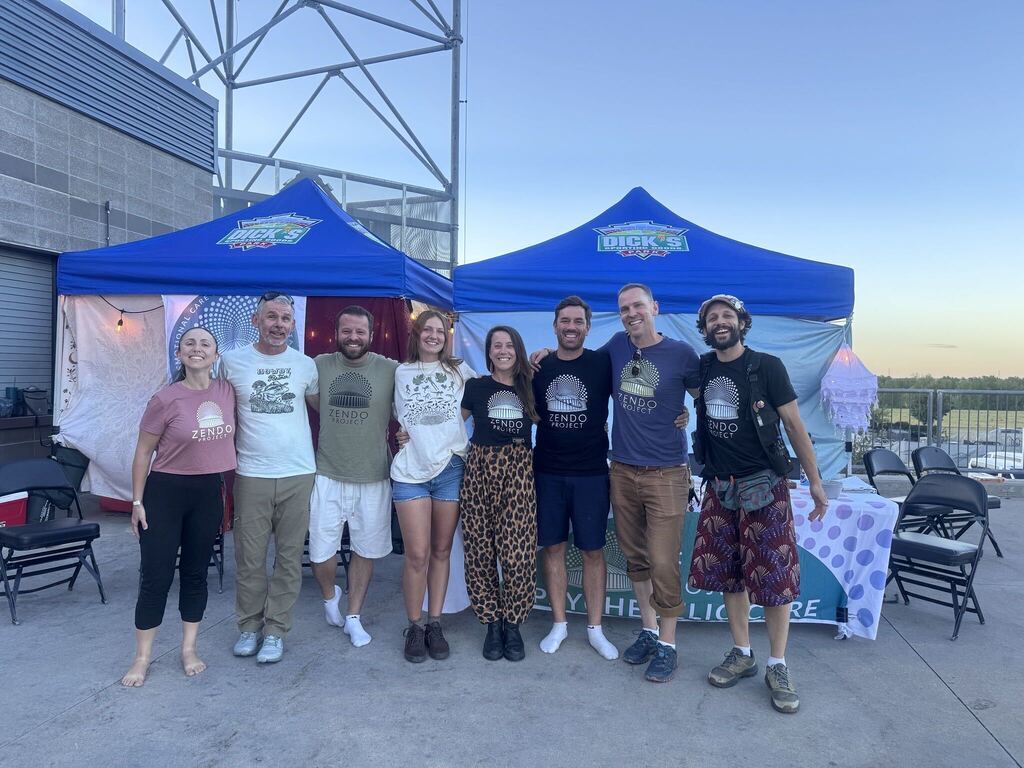
Zendo Lab, Zendo Project’s research team, has published its first peer-reviewed paper in Frontiers in Public Health. We’re grateful to share this milestone with the community that helped make it possible.
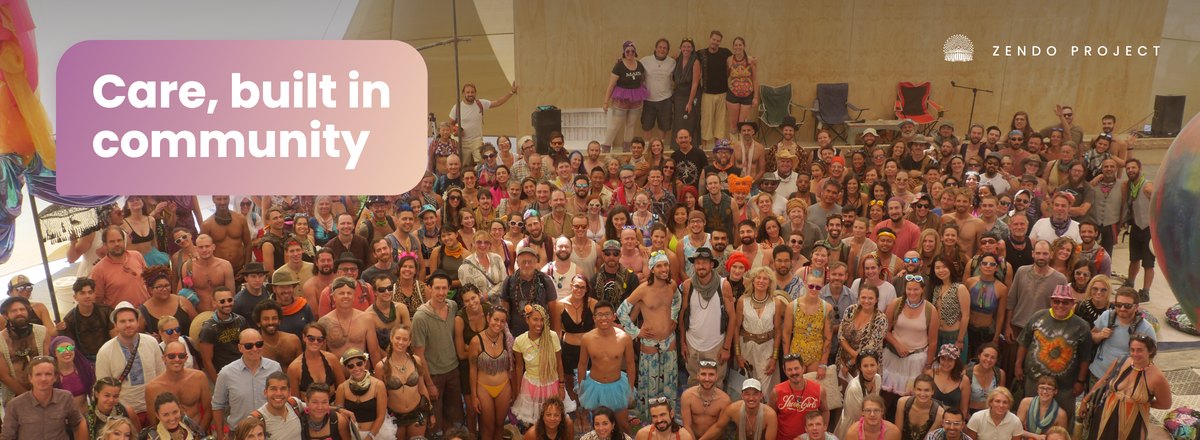
For fourteen years, our community has been showing up for people navigating difficult psychedelic and emotional experiences. Many of you have been part of that work as volunteers, guests, partners, and supporters. You know the attention, patience, and care that go into sitting with someone through a hard moment.
Drawing on that experience, the paper proposes a way to study the care peer supporters provide at events and how they can work alongside medical teams to improve outcomes for people in distress.
Where peer support fits in event care
Events typically plan for medical emergencies and security concerns. But someone can be medically stable, pose no safety threat, and still be frightened or overwhelmed. They may need a quieter place and someone who has time to stay.
The paper describes three complementary pillars of event care: medical services, security, and trained peer support. It outlines how these teams can work together, from the initial safety check to recognizing when a guest’s needs have changed and involving medical or security staff when necessary.
What we learned at our spring events
In spring 2026, Zendo Project piloted an embedded care model at Colorado concerts and nightlife events, bringing trained peer supporters alongside medical teams to support people navigating difficult psychedelic and emotional experiences.
At two Denver-area concerts, we gathered feedback from medical staff before and after the events. We wanted to understand their experiences working with Zendo Project.
Post-event feedback suggested that Zendo Project helped ease medical teams’ workload. Staff described volunteers staying with distressed guests while medical personnel responded to other calls. They also highlighted the value of a quieter space, calming support, and someone available to stay with guests who needed more time and care.
These preliminary observations from a small group of respondents offer insight into how peer support can complement medical care at events.It also helped us refine our approach to future research as we continue to deploy this pilot program.
The role of compassion in peer support
When someone is frightened or overwhelmed, how we approach them matters. The paper explores how patience, respect, and a steady presence may help someone feel safe enough to tell us what they need.
The paper draws on a theory called Altered State Compassionate Integration (ASCI). Formulated by Zendo Lab Lead and Research Fellow Nima Veiseh, ASCI explores how trust and emotional connection may shape a person’s experience of receiving support. It positions compassion as a requirement for collective well-being, stabilizing both individuals and the systems they move through.The paper also asks how we recognize the value of that care. An ambulance trip has a record and a price. Time spent sitting with someone, helping them feel less alone, or helping them tell a medic what they’re experiencing is harder to capture. An event record might tell us how a guest got to the hospital while revealing little about the care they received along the way.
The framework also gives researchers a way to study how peer support fits into the wider event response, including whether it reduces unnecessary escalation, gives medical teams more time to attend to other patients, or changes the cost of providing care.
What comes next
Fourteen years of practice have shown us how much guests can benefit from compassionate peer support. What’s less understood is how that care fits into the larger event response. Through our Denver Pilot Program, we’re continuing to study that question: what medical and event staff experience working alongside us, how our teams coordinate during handoffs, and how embedded peer support affects the broader event response.
We also want the people planning events to understand what it takes to make compassionate support available. A space, a trained team, and time to sit with someone all require planning and resources.
Thank you to the authors, research volunteers, and medical partners who contributed to this publication, and to the community whose years of practice brought us here.
Explore a research collaboration
Connect with us about research questions, partnerships, or opportunities to study peer support in your setting.
Contact us about research →
Support this work
Help sustain Zendo Project’s work in compassionate care, education, and research.
Donate to Zendo Project →
Bring Zendo Project to your event
Talk with our team about incorporating compassionate peer support into your event’s care infrastructure.
Inquire about event services →