Lately, I’ve been reflecting on what it means to spend almost twenty years standing at the intersection of psychedelics and public health, and how it feels to arrive at this moment in partnership with Zendo Project. What began as a college student’s conviction that “good people use drugs” and deserve care, not punishment, has grown into a life’s work: building structures of support around non-ordinary states of consciousness, wherever they occur.
I still remember walking into MAPS’ Psychedelic Science in the 21st Century conference in 2010 as a representative of DanceSafe, early in my Master of Public Health (MPH) program. The energy was electric, but conversations were almost entirely clinical. Very few were talking about public education, equity and access, or the majority of people navigating psychedelic experiences in community, on the dancefloor, or in ceremony. The idea of a psychedelic public health approach—one that promotes and protects the health of all people and the communities in which they live, learn, work, and play—was nearly absent, even as it felt like the obvious missing piece to me.
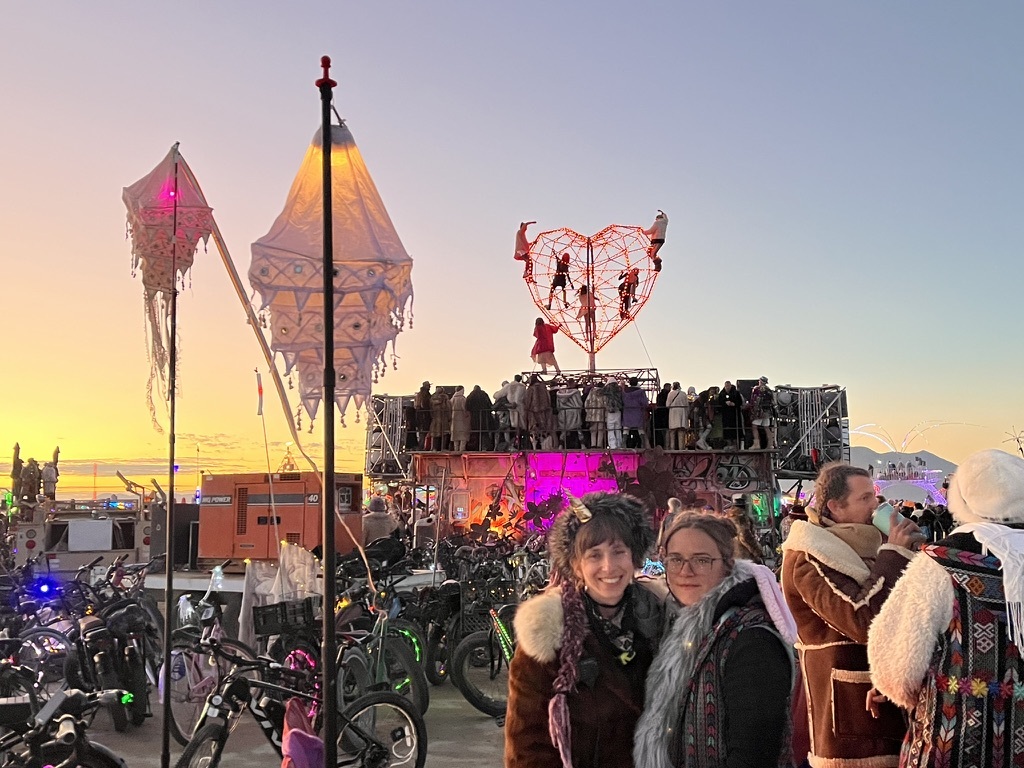
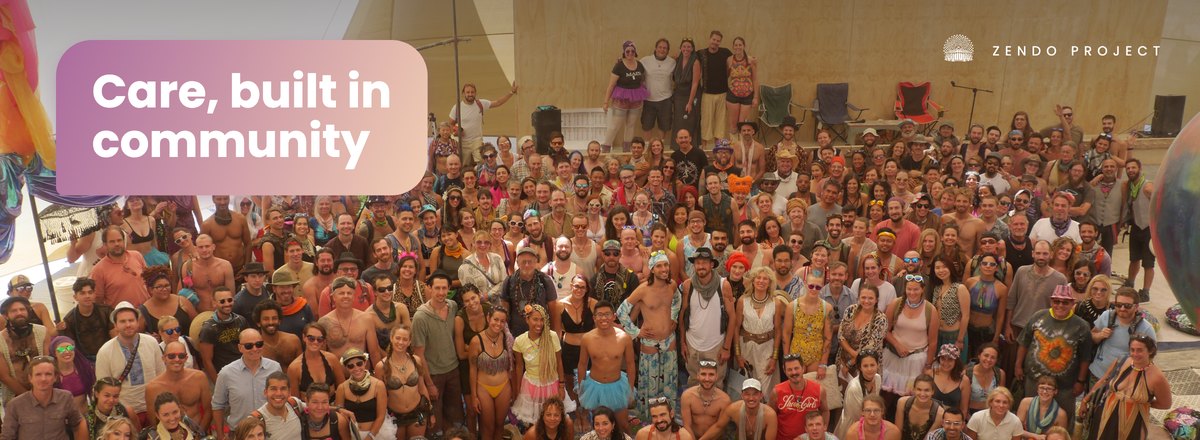
Over the next seven years as DanceSafe’s Executive Director, Zendo and I often found ourselves side by side: sharing stages, cross-training teams, and learning how our complementary models could better hold people who needed it most. The first time I fully took off my DanceSafe hat and joined Zendo’s team at Envision in 2014, something shifted. I had “seen” Zendo in action before, but being a sitter, holding space, coordinating with medical, and quietly preventing countless escalations gave me a new level of respect for what Zendo Project provides and how they practice with integrity, humility, and heart.
That respect only grew through Project #OpenTalk, the collaboration between my consulting company, Healthy Nightlife, Drug Policy Alliance, Zendo Project, and Insomniac Events that brought health promotion, drug education, sexual health, peer support, and back-of-house drug checking under one umbrella at some of the largest EDM festivals in the world. At events like EDC Las Vegas, I witnessed Zendo staff and volunteers manage multiple locations, train outreach and Ground Control teams, and ease the burden on the medical team while offering judgment-free, trauma-attuned support. A new paradigm was taking shape: Insomniac’s public embrace of harm reduction and their willingness to put our services on the map signaled that this work was becoming part of the infrastructure of care.
Today, as Co-Founder of the Center for Psychedelic Public Health and external evaluator of Zendo’s Sitting and Integration Training (SIT) and Emergency Psychological Response (EPR) programs, that paradigm has a name and a growing body of evidence behind it. We are beginning to articulate what many of us have practiced for years: that Zendo is not just a beloved service, but a model for community-centered, evidence-informed psychedelic care. This feels like a full-circle moment, not an ending but an integration.
The same values that first drew me to a DanceSafe table and a festival harm reduction tent are the values I now study, teach, and help evaluate: compassion and service, integrity in care, generosity and collaboration, learning and connection. My hope is that as psychedelic public health continues to emerge as a discipline, Zendo’s decades of practice will be recognized not only as a response to crisis, but as a blueprint for how we can hold one another—on the dancefloor, in our neighborhoods, and across entire systems.

In Psychedelic Service,

Missi Wooldridge, DrPHc, MPH
Center for Psychedelic Public Health
Co-Founder
Psychedelic Public Health as an Emerging Field: Zendo Partners with CPPH

Zendo Project, via our research initiative, Zendo Lab, is proud to partner with the Center for Psychedelic Public Health (CPPH) to support the emerging field of psychedelic public health and the ongoing evolution of our programs.
As psychedelics become increasingly present in our world, coordinated public health infrastructure and education become vital.
The question is no longer whether psychedelics will become mainstream, but how to navigate a world in which they are. In this Op-Ed, our CPPH partners explore how guardrails can be built to support safety, equity, and community wellbeing.
Most psychedelic use occurs outside clinical settings. That reality requires systems that extend beyond individual treatment models.
For decades, peer support and harm reduction practitioners have built community-based safety nets in real-world settings. What is emerging now is the language and coordination to integrate those efforts into broader public health systems.
Seeking Research Participants

We are partnering with researchers at Emory University on a study to better understand psychedelic-related challenges. The study is recruiting 800 people who have experienced challenges that persisted after the end of a psychedelic experience. 400 of these participants will be invited to participate in a one-year longitudinal study. This will allow researchers to better understand the nature of psychedelic-related challenges, their trajectories, and what helps along the way.
This is a compensated study open to participants from the US and Canada.
To learn more, visit psychedelicchallenges.org or complete a brief screener.
You can also read more about the study on the MAPS Bulletin.
If you have additional questions, please contact p.psych@emory.edu.
Community Opportunity: MAPS Italia Training
In September 2026, MAPS and their global affiliate MAPS Italia will host Italy’s first week-long education program, bringing together 55 mental healthcare professionals near Turin. This program will be taught in English by MAPS’ Lead Trainers, Marcela Ot’alora G., MA, LPC and Bruce Poulter, RN, MPH.
This program is for clinicians and mental healthcare professionals to deepen their understanding of inner-directed therapy and the therapeutic potential of investigational MDMA-assisted therapy for PTSD. Applications are now open!
This will be the only available program taking place in Europe for the rest of 2026.