

2026 MID-YEAR REPORT
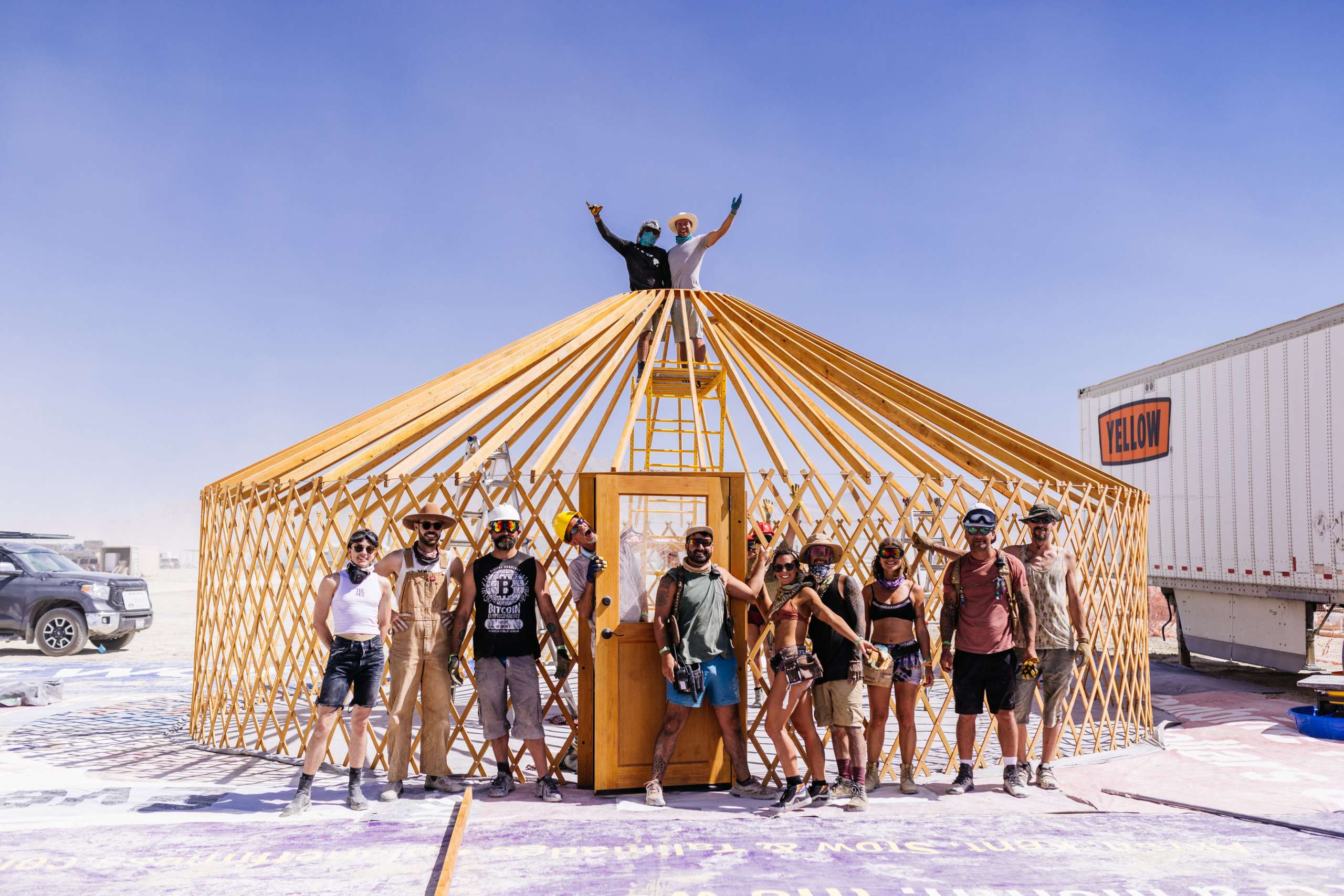

Born at Burning Man.
Built for the world.
Building the psychedelic safety net
Millions of people are already using psychedelics, and that number continues to grow.
Some will find healing, connection, and transformation. Others will encounter fear, grief, confusion, or emotional overwhelm.
Many psychedelic experiences happen in homes, festivals, campuses, and communities. The question is whether we will build a safety net to support these individuals exploring altered states in non-clinical settings.
For more than 14 years, Zendo Project has been helping answer that question.
What began as a small harm reduction initiative at Burning Man has grown into one of the most trusted organizations in psychedelic care—supporting thousands of people through difficult experiences, training thousands more in compassionate peer support, and building the evidence needed to help psychedelics integrate into society safely and responsibly.

For more than a decade, we’ve had a front-row seat to what happens when people encounter the most challenging and transformative moments of their lives. Our responsibility now is to take what we’ve learned in the field and help ensure that harm reduction is part of the conversation as psychedelics become integrated into society.
Building the Psychedelic Safety Net
Together, our three programs address immediate needs while building the infrastructure for a safer psychedelic future
Events
Addressing critical care gaps in high-risk environments
Education
Empowering people to become part of the safety net
Research
Turning real-world experience into evidence for the field.
Event services
Festivals and nightlife settings remain some of the highest-risk environments for challenging psychedelic experiences, yet support services often remain underfunded and difficult to sustain.
Zendo Project is testing a new model that embeds trained peer supporters directly within event medical systems. Long-term, we aim to establish a scalable, sustainable model that makes psychedelic care and emotional support a standard part of event safety infrastructure.
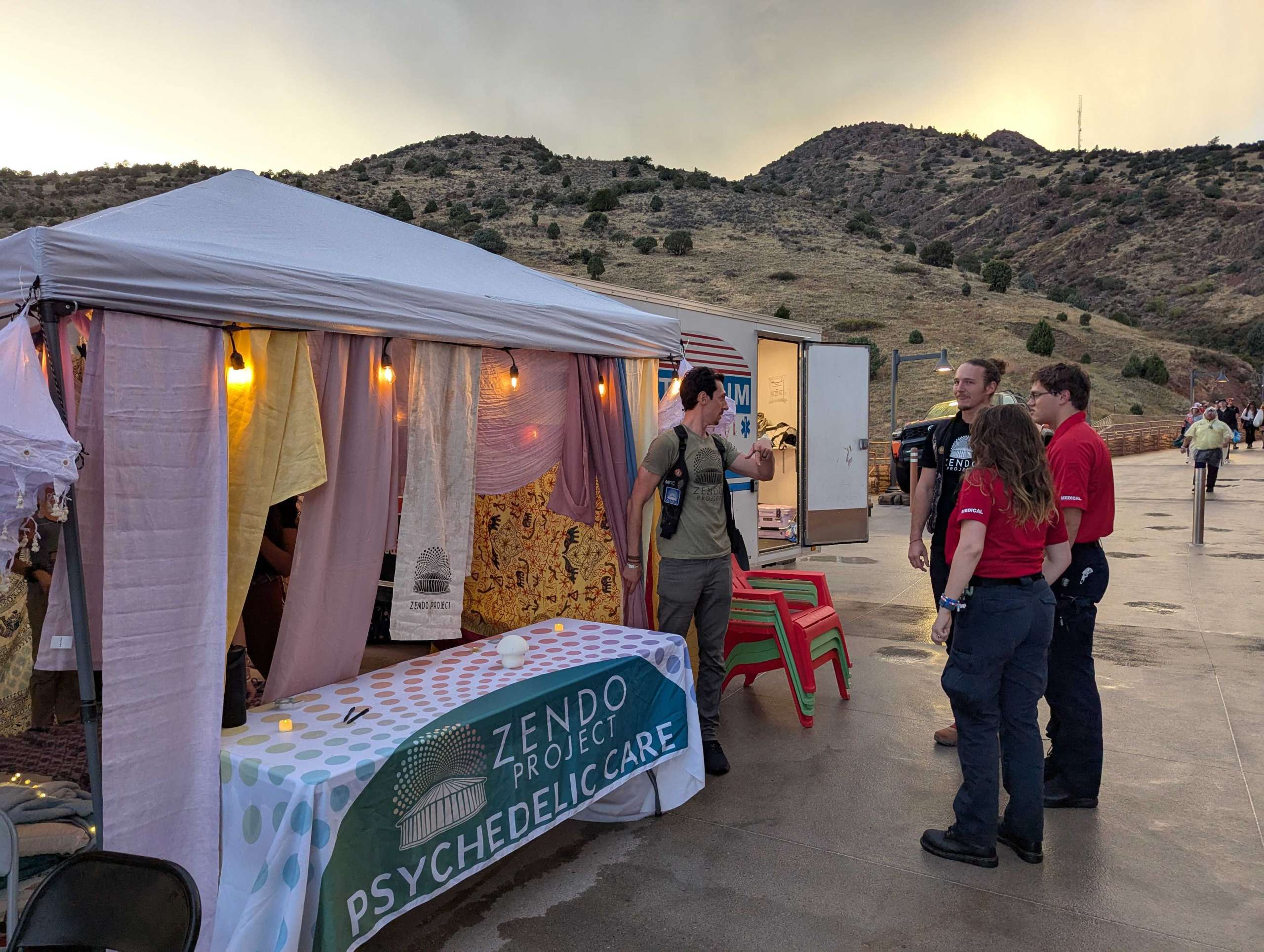
WITH VS. WITHOUT
Embedded Care Model
Stadium Medical Partnership
Established a partnership with the medical team at Red Rocks Amphitheatre, the second most-attended music venue in the U.S., to develop and evaluate integrated models of psychedelic care and emotional support.
We need the right tool doing the right job. Without Zendo, patients can be restrained, sedated, and end up in the ER. I’ve seen people go to Zendo and go home—which is the ideal outcome.
Our presence extends far beyond the Zendo tent. It shifts the entire culture of an event toward compassionate care.
Education
Most difficult psychedelic experiences happen outside clinical settings. Yet communities often lack the skills to support someone through emotional distress, and many crisis response systems are not equipped to respond to challenging psychedelic experiences.

Community Education: Sitting & Integration Training (SIT) translates more than a decade of field experience into practical skills that help people meet emotional intensity with presence, compassion, and confidence, building more resilient communities.
Professional Training: Our professional programs bring our field-tested approach into crisis response, healthcare, and event operations. We help professionals integrate compassionate, psychedelic-informed care into the systems people rely on in moments of crisis.
Professional Training: Crisis Teams
Received 250k grant to bring 14 years of lessons from psychedelic care into crisis response teams, hospitals, and behavioral health systems.
Long-term, we envision these compassionate support skills becoming a standard part of crisis response training and systems of care.
Community: College Campus Initiative
Exploring how psychedelic harm reduction and emotional support education can reach young adults at a formative moment in their lives.
Long-term, we envision psychedelic harm reduction becoming a routine part of campus wellness programs, much like alcohol and sexual health education today.
We often treat difficult emotions as problems to solve or suppress. Zendo Project teaches something different.
Fear, grief, uncertainty, and emotional intensity are part of being human, and supporting others through those experiences is a skill that can be learned.
The Zendo SIT course felt as valuable to me for everyday life and relationships as for supporting psychedelic journeys…It feels to me like there is nothing the world needs more now than for human beings to develop such respect and kindness and intelligence in relating to one another.
Research
For more than a decade, Zendo Project has witnessed the impact of compassionate psychedelic care firsthand. But as psychedelics become more integrated into healthcare systems, public policy, and mainstream culture, stories alone are no longer enough. If psychedelic harm reduction is to become part of future systems of care, it must be supported by rigorous research and real-world evidence.
In 2025, we launched Zendo Lab to transform operational knowledge into research. This means that whether we are supporting someone through a difficult experience, training a peer supporter, or advising on venue safety infrastructure, we are generating evidence that belongs to the broader ecosystem.
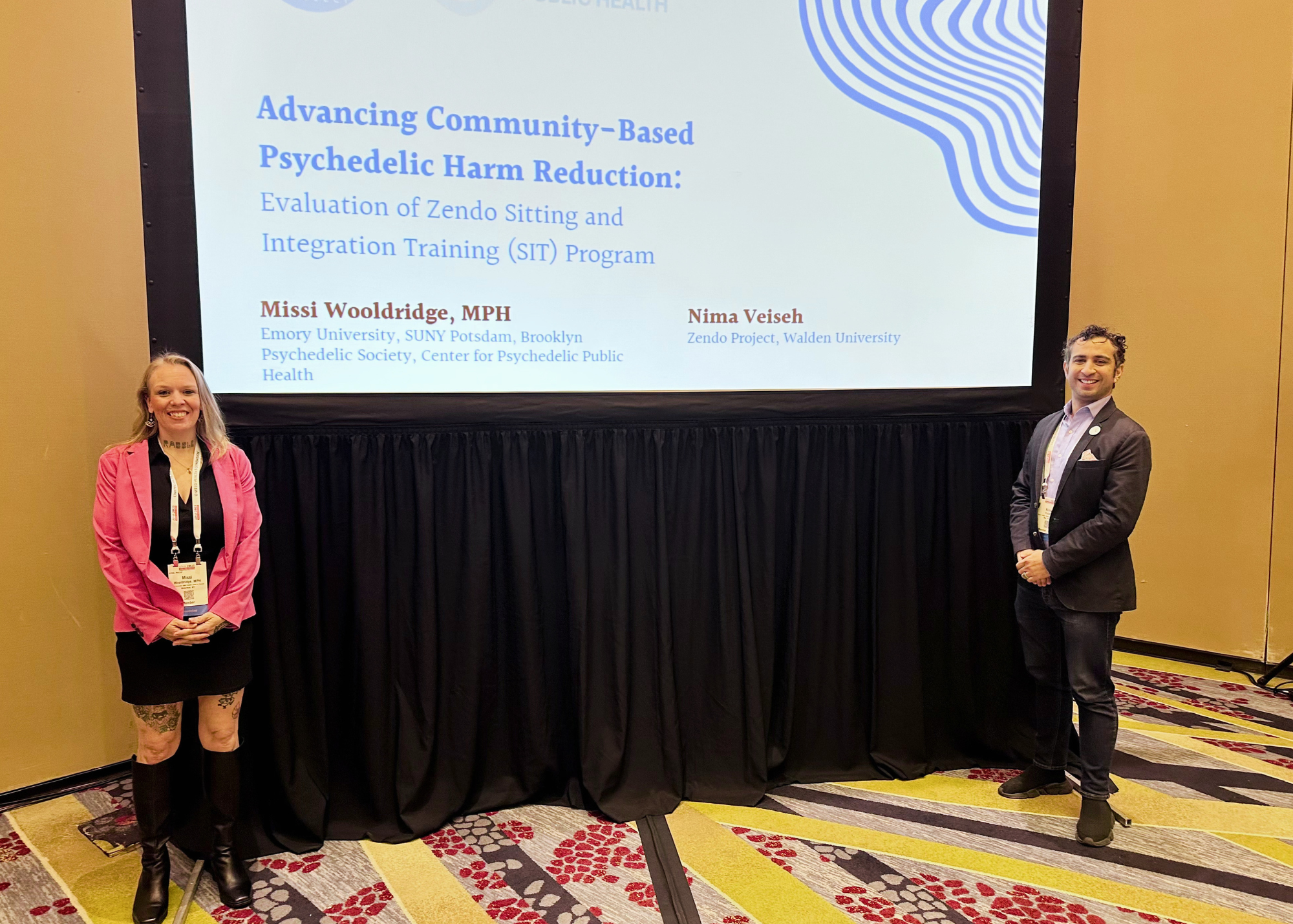
Nima Veiseh and Missi Wooldridge presenting at APHA Conference
Most psychedelic research takes place in highly controlled clinical settings. Yet the majority of psychedelic experiences occur elsewhere: at festivals, retreats, gatherings, and within homes. These environments remain among the least studied parts of the psychedelic ecosystem, despite being where many people encounter altered states and seek support.
Event-Based Peer Support & Medical Systems
Examining how peer support influences guest outcomes, medical utilization, and event operations.
Behavior Change Following SIT Training
Evaluating how psychedelic support education influences confidence, supportive actions, and community capacity.
Partnering to evaluate our programs and translate real-world insights into public health evidence.



Zendo Lab is helping ensure that the voices and experiences of the people we serve are translated into a language [data] that policymakers, public health leaders, and the field needs to responsibly shape the future of psychedelics.
From Experiences to System Change
5-YEAR VISION
The systems designed to help people in crisis are failing. Even when they work as intended, there are enormous gaps that fall hardest on the most vulnerable, gaps that clinical care alone cannot fill. This is especially true at the edges of conventional care, where psychedelic experiences and altered states have long gone unaddressed or been met with harm.
We envision a future where compassionate support is woven into both our communities and our institutions, where practical, human-centered skills are held not only by clinicians and crisis responders, but by neighbors, friends, event staff, and everyday people. By expanding who has the skills to support others and building the evidence that demonstrates why these approaches matter, we believe we can help create more responsive systems of care and a more resilient culture of support that benefits us all.